How to Clean Your Living Room: 6 Simple Steps
On this page
Cleaning the living room is really a six-step sequence: declutter, dust, vacuum, treat fabrics, wipe the details and finish with the windows. Done in that order, each step makes the next one easier, and the whole room can be guest-ready in about an hour. Here is the routine, plus how often to repeat each piece of it.
Step 1: Declutter and reset the room
Start by returning everything to its home: remotes to the caddy, toys to the bin, mail to the counter, throw blankets folded. Clear coffee tables and shelves so surfaces are actually cleanable: dusting around clutter just moves dust from one pile to another. Use baskets or a tray for the items that genuinely live in the living room, like remotes, magazines and chargers, so tidying stays a 30-second job between cleans.
Step 2: Dust top to bottom
Work from the highest point down (shelves, picture frames, lampshades, the TV stand, then the coffee table) so dust that falls is picked up by the next pass. A damp microfiber cloth traps dust rather than flinging it into the air; save a dry cloth for electronics. Dust collects fast in living rooms because of all the fabric, so weekly dusting keeps the visible layer thin and keeps allergens down. The EPA notes that regular dusting and vacuuming are practical steps for improving indoor air quality, and dust in the home is a common trigger for allergy and asthma symptoms.
Pay special attention to the spots that get missed:
- Tops of door and window frames
- Lamp shades and light fixtures
- Behind the TV and along cords
- Baseboards and vents
- Plant leaves and decor
Step 3: Vacuum and clean the floors
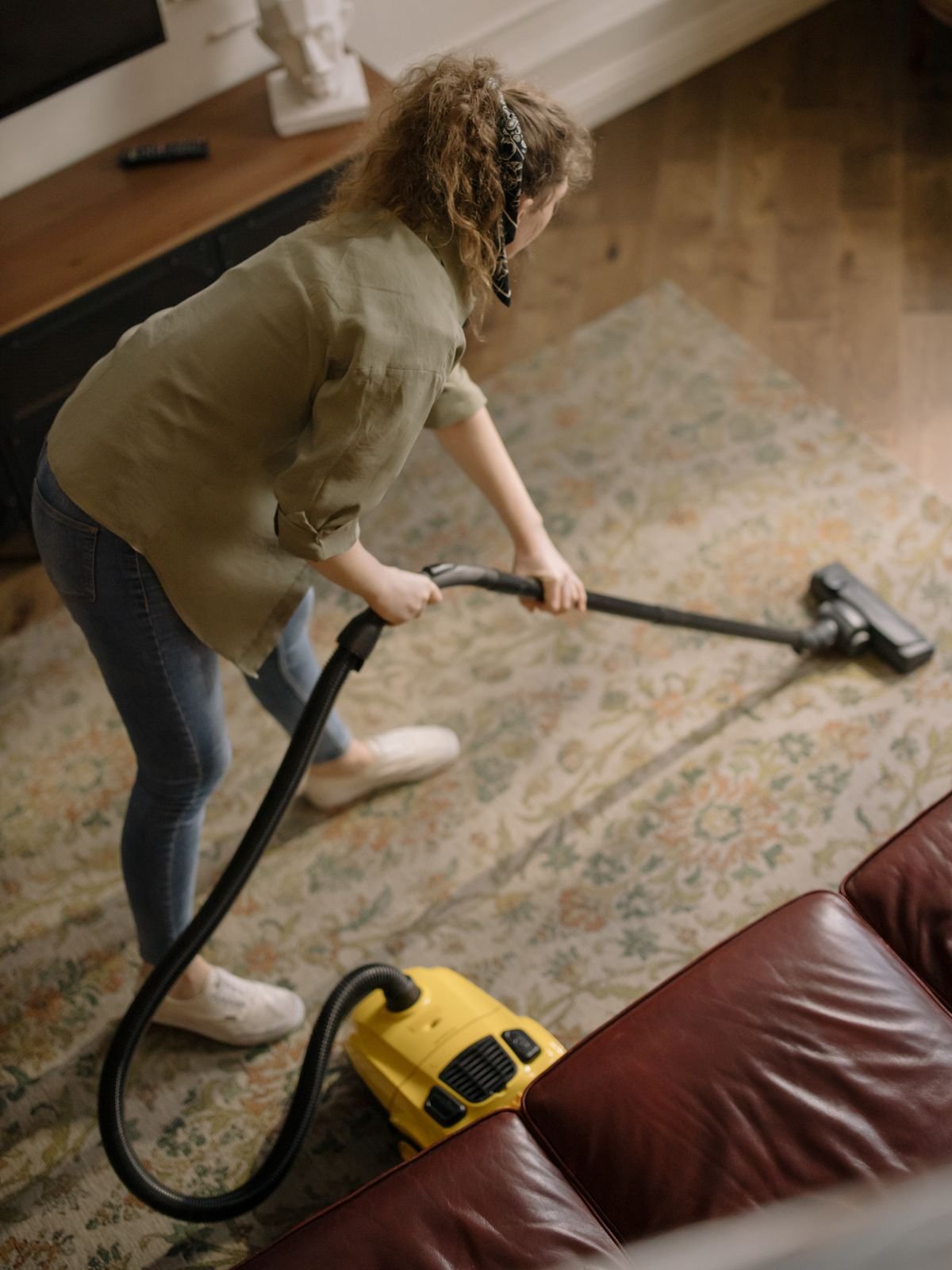
Vacuum the whole floor, including under the couch and coffee table, where dust bunnies and lost toys gather, then mop hard floors with a cleaner suited to your flooring. For carpets, vacuum weekly in the traffic lanes and use a HEPA-filter machine if anyone in the home has allergies. Carpets hold onto allergens and dust, and the National Institute of Environmental Health Sciences lists household allergens like dust mites and pet dander among the most common triggers of allergic reactions, so regular vacuuming is the main line of defence.
Step 4: Freshen the fabrics
Sofas, chairs, curtains, pillows and blankets absorb dust, crumbs, pet hair and odours. Once a week, vacuum upholstery with the brush attachment, reaching into seams and crevices, and fluff and rotate cushions so they wear evenly. Wash machine-washable throws and cushion covers monthly, and treat stains promptly: the longer a spill sits, the harder it is to lift. For curtains, vacuum them on the rod or wash them per the care label a couple of times a year.
Step 5: Wipe the details
This is the step that makes a room look professionally cleaned: wipe light switches, door handles, remotes, the TV remote, coasters and the coffee table with an appropriate cleaner. Glass tables and mirrors get a streak-free finish with a glass cleaner and dry microfiber cloth. If you have wooden furniture, use a product made for wood rather than an all-purpose spray, which can dull the finish over time.
Step 6: Finish with windows and fresh air
Clean windows and mirrors let the room feel brighter and bigger, and open windows for even a few minutes after cleaning to flush out dust stirred up during the job. Fresh air matters for more than scent: ventilation reduces indoor humidity and dilutes airborne particles, which the Canadian Lung Association highlights as part of keeping indoor air healthy.
A living room cleaning schedule
| Task | Frequency |
|---|---|
| Tidy surfaces and reset the room | Daily (5 minutes) |
| Dust all surfaces | Weekly |
| Vacuum floors and upholstery | Weekly |
| Mop hard floors | Weekly |
| Wash throws and cushion covers | Monthly |
| Clean windows and mirrors | Monthly |
| Wash curtains, deep-clean carpets | Every 3 – 6 months |
When to bring in professionals
Weekly upkeep is quick, but deep tasks (carpet shampooing, curtain washing, cleaning behind heavy furniture) often wait for months. That gap is where a professional clean comes in. Cleaning Hive’s regular home cleaning keeps the living room on its weekly schedule, a home deep cleaning covers the sofa, curtains, baseboards and corners that weekly visits skip, and a one-time cleaning is the simplest way to get the room guest-ready before a special occasion. Check the FAQ or book online.
Frequently asked questions
How often should I clean my living room? Tidy daily, dust and vacuum weekly, mop hard floors weekly, wash soft furnishings monthly, and deep clean every three to six months. If that sounds like a lot, even the weekly dust-and-vacuum pass keeps the room presentable.
What is the best way to clean a fabric sofa? Vacuum it weekly with the upholstery attachment, treat stains as soon as they happen, and wash removable covers per the care label. For a deep refresh, professional cleaning every 6 – 12 months lifts the embedded dirt regular vacuuming misses.
How do I get dust off electronics without damaging them? Use a dry microfiber cloth and never spray liquid directly onto devices: spray the cloth instead. For screens, use a product made for electronics. Power down and unplug before cleaning anything delicate.
Does a clean living room help with allergies? Yes. Dust mites, pet dander and dust collect in carpets, upholstery and curtains, and vacuuming with a HEPA filter plus regular dusting meaningfully reduces those triggers in the room where you spend most of your waking hours at home.