Condensation and Mould in Vancouver Condos: What Actually Helps

On this page
From October to March, many Metro Vancouver condo owners wake up to wet glass and dark spots on the sills. A few steady habits move that moisture out before it becomes a problem.
Why condo windows run with water in the wet months
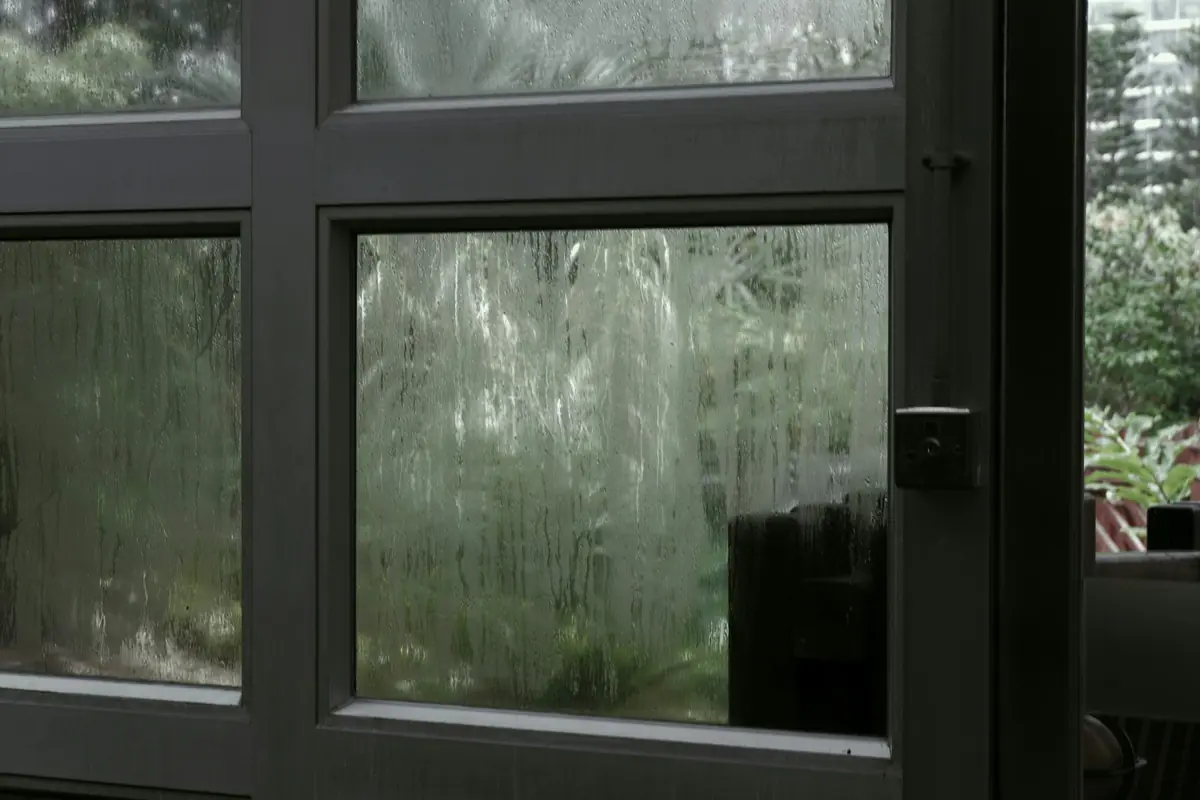
Condensation is not a defect in your suite; it is simple physics meeting a sealed box. BC Housing explains that condensation forms when moist indoor air meets a colder surface, and glass is usually the coldest surface in the room, so the water shows up there first (BC Housing’s condensation guide). HealthLink BC adds that when indoor and outdoor temperatures differ a lot, water condenses on windows and mould can then grow on the frames or sills.
A modern condo suite is compact and well sealed, which is great for heating and less great for moisture. Every shower, every kettle, every pot on the stove, laundry drying on a rack and even a night of sleep adds water vapour to the air. With the windows closed from October to March, that vapour has nowhere to go but the glass.
It shows up in predictable places first. Watch the bottom corners of the panes, where the glass is coldest and water pools; the frames; the tracks of sliding doors, which hold standing water; and closets against outside walls, where air sits still. Run a finger along the bottom edge of a pane on a January morning and you will often find a ribbon of water sitting exactly there, ready to soak into paint and caulking. Catching it in those early spots is the whole game.
A ten-minute morning routine for wet windows
Health Canada’s advice is direct: dry window frames and sills daily, and keep window coverings open so warm air can reach the glass, since heavy curtains or blinds can trap cold and moisture against it; keep baseboards and heating vents clear of furniture so warm air can move (Health Canada’s moisture and mould guide). Here is a routine that takes about ten minutes:
- Open the blinds and curtains fully, and keep them open through the day. BC Housing also suggests keeping blinds 1 to 2 inches off the sill so warm air can flow over the glass.
- Squeegee each wet pane from the top down, working one window at a time so the water doesn’t dry into streaks.
- Towel the frames, sills and sliding-door tracks until they are fully dry.
- Open the trickle vents, the small sliders or flaps in the window frame, so air keeps moving even with the window shut.
- Run the bathroom fan during every shower and for 30 minutes after, and the kitchen fan while cooking.
- Hang damp towels and cloths where air moves, not bunched on a hook behind a closed door.

Do this before you leave for the day, not at night. Water that sits on a sill all day while you’re out has all day to soak into paint and caulking, and a dry sill takes seconds to achieve.
Take the moisture out before it reaches the glass
Wiping is the cure; ventilation is the prevention. The habits below remove water vapour at the source, so less of it ever reaches the glass.
Fans, trickle vents and the air exchanger
The bathroom fan matters most. HealthLink BC says to run it while you shower and for 30 minutes after, and to use exhaust fans that vent to the outside in kitchens and bathrooms; Health Canada adds that you should check the fan moves enough air and vents outside, not into the attic. In the kitchen, lids on pots cut the steam sharply, and cooking with the fan on keeps the rest of the suite out of the steam cloud.
Laundry deserves the same attention. BC Housing recommends drying laundry in a dryer vented outside and inspecting and cleaning the dryer’s lint trap before each use, and Health Canada notes that hanging wet laundry indoors raises relative humidity.
If your suite has an HRV or air exchanger, treat it as the backbone of the whole system. BC Housing says an HRV is meant to run continuously to remove moisture and pollutants, and that shutting it off for long periods can lead to a build-up of humidity and pollutants and to mould and mildew. Your strata or the manufacturer’s manual tells you where the filters are in your unit.
The upkeep is simple and seasonal. BC Housing says to turn the HRV off and unplug it, then clean its filters at least every three months; filters in most new units can be vacuumed and washed with mild soap and water. If a humidistat controls it, set it low enough that condensation stops forming on the windows, typically in the range of 30% to 60% relative humidity.
A dehumidifier, and the upkeep it needs
A dehumidifier earns its floor space once the fans and vents alone aren’t enough. Health Canada says to keep indoor relative humidity between 30% and 50%, using a dehumidifier if needed, and that an inexpensive hygrometer measures it (Health Canada’s humidity advice). That range and BC Housing’s winter rule of 35% to 60% differ slightly because they come from different guides; both land in the same territory, so pick one and watch the glass. Buy a hygrometer first: it costs little and tells you whether, and where, you have a problem. HealthLink BC adds that a dehumidifier should be chosen for the room size and its humidity.
Then keep it working: empty the tank before it fills and shuts off, and clean or rinse the filter the manual describes. Run it with the windows closed, as Health Canada advises for dehumidifying a damp space. Keep furniture off outside walls while you’re at it: BC Housing recommends moving sofas and bookcases so they don’t touch them, so air can circulate.
Cleaning the marks condensation leaves
Once the moisture is under control, the marks it left can come off. Work top to bottom and dry everything fully at the end; a surface left damp invites the problem straight back.
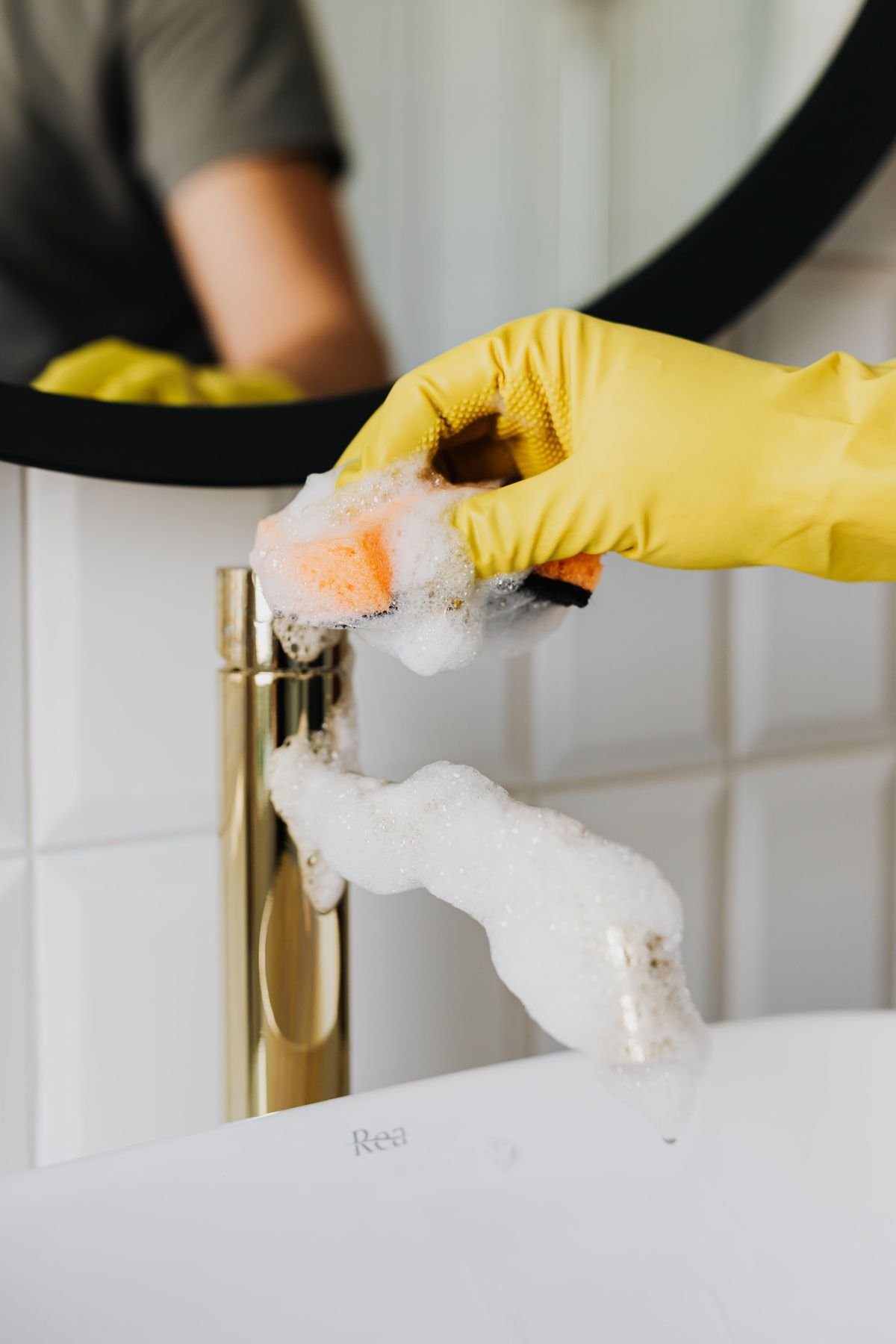
Sills, frames and tracks. Warm water and a little dish detergent, a cloth or soft brush, then a dry towel (BC Housing’s window care sheet). For sliding doors and windows, clear the sliding track of debris and, once a year, clean the weep holes so water can drain the way it was designed to.
Silicone, caulking and seals. This is where black spots usually start. Use a soft brush with detergent and water, don’t soak the joints, and dry them after. Health Canada says to repair or replace cracked or damaged tiles, grout and caulking, since damaged seals hold water. Stay away from abrasive cleaners or solvents, which BC Housing warns can damage the frame, glazing and joints.
Small patches of mould. You can clean a small area yourself. HealthLink BC says an area under one square metre can be cleaned with detergent and water, wearing household rubber gloves, safety glasses or goggles and a KN-95 mask or better, and that afterwards you fix the cause, whether that’s water damage, high humidity or poor ventilation. Health Canada says the same for small and medium areas with water and dish detergent, safety glasses or goggles, an N95 mask and household gloves. There is no need for bleach, Health Canada notes, so detergent and water on its own is the whole toolkit, and there is nothing to mix.
Marks that keep coming back. A patch that keeps coming back after you clean it is telling you the moisture is still winning. Go back to the routine above before treating the symptom again.
Towers, older suites and strata buildings
Vancouver’s housing stock makes this a citywide conversation, not just a tower problem. In Coal Harbour, most suites sit in concierge towers built from the 1990s on, with open-plan kitchens, compact bathrooms and walls of glass facing Burrard Inlet; floor-to-ceiling glass shows every fingerprint and every water line. The lofts and towers of Yaletown mix hard lofts in the old railway warehouses, with timber beams and tall windows, and concrete-and-glass towers on the former Expo 86 lands.
The West End is mostly apartments, from three-storey walk-ups to mid-century rental towers, and older suites there often have radiators, deep sills and original wood floors: exactly the sills that collect water all winter. Each era asks something different of you, from wiping a wall of glass to drying out a deep sill beside a radiator.

A lot of Vancouver lives in strata buildings, from downtown towers to three-storey walk-ups, and each building handles access a little differently. Some of this is yours and some is the building’s. Inside your suite, the fans, the trickle vents, the dehumidifier and the daily wipe-down are all yours to run.
So draw the line plainly. If condensation persists after you’ve run the routine, BC Housing says to report it to your maintenance manager. Renters can speak to their landlord about mould problems, as Health Canada advises. Put it in writing, note when the windows fog and which rooms, and keep your own fan and dehumidifier routine going while you wait.
When to bring in help
A deep clean won’t fix ventilation or remove mould, but it clears the build-up a wet season leaves behind: sills, shelves, door frames and vents, bathroom exhaust fans and light fixtures wiped, tiles and grout lines scrubbed, floors vacuumed into the edges. It’s worth one before the wet months start, or after a long stretch of them. See what a deep clean covers, or the broader guide to what a deep clean includes. Book online 24/7 and choose your time, or call us at (647) 558-0932 any time.
Frequently asked questions
Do houseplants make window condensation worse?
Maybe, but the moisture that fills a suite comes from the sources BC Housing lists: showering, cooking and drying clothes indoors. Spacing plants away from a fogging window is worth trying alongside the fan and squeegee routine, and it costs nothing to test for a week.
Should I leave the heat on through the workday?
Yes, keeping the air in that range through the day keeps the glass warmer. BC Housing’s rough rule of thumb for coastal BC in winter puts comfortable indoor air between 18 and 24°C, with relative humidity between 35% and 60%. Glass that stays close to room temperature gives water vapour less of a cold surface to settle on overnight.
Can I use bleach on the black spots in my window tracks?
No, there is no need for bleach: detergent and water does the job on tracks too. Scrub with unscented dishwashing detergent and water, as Health Canada specifies, then dry the track fully so the joint does not stay damp.
Where else should I check for damp besides the windows?
Health Canada suggests checking basements, closets, window sills, roofs and around sinks, tubs and pipes for damp spots, sealing tubs and sinks, and throwing out basement clutter such as cardboard boxes. In a condo, the closet on an outside wall and the cabinet under the kitchen sink are the spots most worth a look.
What does the trickle vent in my window frame actually do?
It lets a small, controlled amount of air move through the frame even when the window is shut. Not every suite has one: check your frames for a small slider or flap, and leave it open through the wet months.
Topics