How to Clean a Condo Balcony Without Bothering Anyone
On this page
A condo balcony cleans up well with a bucket, a cloth and a plan: work top to bottom, use as little water as possible, and keep everything, water included, on your own balcony.
Check your building’s rules first
Before the first sweep, look through your building’s paperwork. A condo’s governing documents are its declaration, by-laws and rules, and as the Condominium Authority of Ontario explains, they set out what owners, residents and the corporation can do, and all owners and residents must follow them. Your building may have rules about water on balconies, hosing anything down, shaking mats over the edge or hanging items over the railing; the rules exist because someone below gets the result.
The balcony itself is in an unusual legal position. According to the CAO, a balcony is usually an exclusive-use common element: the corporation owns it and you have the exclusive use of it, which is why who owns the balcony matters before you scrub. Treat the surfaces gently, don’t drill, glue or alter anything, and if you want to change anything at all, expect that most owner-proposed changes to common elements need the board’s approval under a formal agreement.
If you can’t find the rules, ask the concierge or the management office. They can tell you what’s allowed on balconies in your building, whether cleaning products are restricted, and whether anything you’re planning needs sign-off. Renters should check the lease too, since a building owner or a condo board can set restrictions in the lease or the bylaws that residents must follow. The CAO also notes that boards enforce the governing documents in escalating steps, from notifying the resident up to the Condominium Authority Tribunal, which is a good reason to stay inside the rules in the first place.
Clear, sweep and wash with very little water
Start with everything off the balcony: furniture, planters, mats, the recycling bin that lives out there in summer. Carry items inside or stack them at one end, and check under each one for the ring of grit and seed husks that hides beneath. With the floor bare, the rest of the job is straightforward.
The routine, in order:
- Clear the floor completely and stack loose items at one end.
- Sweep the railing rails and any ledges, then painted concrete walls, then the floor, toward the door.
- Pick up the pile with a dustpan, never over the edge.
- Wash the floor in small sections with a wrung-out cloth and soapy water.
- Squeegee the last film off smooth deck tiles, then wipe the tiles dry.
- Clear the drain or gap at the door of packed leaves so rain can escape.
Sweep from the top down so dust doesn’t land on what you’ve already cleaned. A soft brush gets into the corners where dust and dead leaves collect against the glass panel. Anything that goes over the edge lands on a neighbour’s balcony or the entrance below, so the dustpan is the only way a pile leaves the floor.
For washing, one bucket, warm water and a little dish soap is all the floor needs. Work in small sections with a cloth or soft brush, wring it well so the cloth is damp rather than dripping, and wipe up any water you spill as you go. On textured deck tiles, brush with the grain of the texture rather than across it, and rinse the cloth in the bucket often so grit doesn’t scratch the surface. A squeegee takes care of the last wet film on smooth tiles.

Two things to leave out of the plan: no hose, and no pressure washer. The water has to go somewhere, and on a balcony the somewhere is straight down onto the balcony below, along with whatever you’ve loosened. The same goes for the rinse water itself; keep the bucket away from the edge and pour it down a sink inside when you’re finished.
Glass railing panels, the door glass and the track
Glass railing panels usually show every fingerprint and water spot, and they clean up beautifully with minimal water. Stand inside the balcony and wash each panel from the inside only, working with a damp microfibre cloth and a squeegee, top to bottom, one width of the squeegee at a time. Wipe the squeegee blade with a dry cloth between passes so you don’t drag water in lines; the outer face is out of reach from inside the balcony, and rain takes care of it over the season.
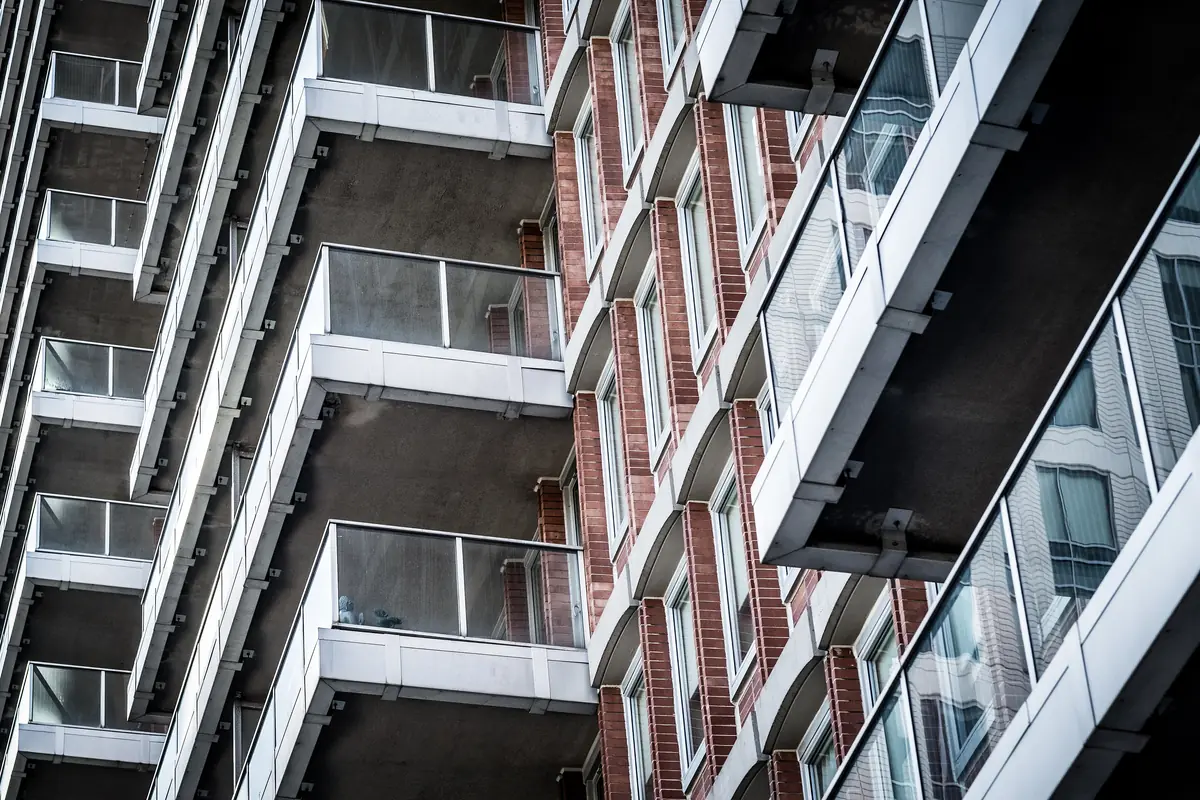
The balcony door glass deserves both sides. The inside face collects the everyday fingerprints; the outside face collects the weather. Use the same damp cloth and squeegee routine, and finish with a dry microfibre cloth on any remaining streaks. Cloudy white marks that don’t wipe off are likely mineral deposits left by dried water, so give them a gentle rub with a damp cloth rather than scrubbing dry.
The track is the part that rarely gets the attention it deserves, and it matters most of all. Vacuum it first with the crevice tool to lift the grit, then run a damp cloth wrapped around a butter knife or an old toothbrush along the channel, rinsing the cloth often. Work from the middle outward so debris comes out onto the floor you can sweep, not into the weep holes that drain the track. A dry cloth at the end leaves the door sliding smoothly, and a clear track is your best defence against water backing up inside during a heavy rain.
Planters, pigeons and the fall put-away
Planters are the friendliest source of neighbour trouble, since water finds the gap in any balcony floor. Set every pot on a saucer so water drains into it instead of through the boards, and lift saucers after watering to wipe underneath. Pick off dead leaves before they drop, and bag spent soil and annuals rather than tipping a pot over the rail. If a pot has stained the deck tiles, a paste of baking soda and a drop of dish soap, scrubbed gently and wiped away with a barely damp cloth, lifts most rings.
Pigeons are the other regular. The City of Toronto’s advice is to discourage pigeons on your balcony by removing nearby food and water sources and picking up garbage, clutter and debris, since pigeons settle where they can eat and roost; its pigeon page also suggests sealing large openings and fixing tin flashing to a rail or ledge at a 45-degree angle to stop perching. If they’re nesting, the City says to tell your landlord or property management, and notes the City does not remove pigeons from private property.
If droppings have accumulated, handle them carefully. The Canadian Centre for Occupational Health and Safety explains the histoplasmosis risk in bird droppings: droppings can support the growth of the fungus that causes histoplasmosis, an infection that usually affects the lungs and starts when its spores are breathed in, so the goal is to avoid dust. Spray the droppings with water before cleaning to keep the dust down, and wear gloves, coveralls and a respirator with a HEPA filter while you work. Soak the material, lift it with a cloth rather than scraping it dry, and keep the dust down as you work.
Fall is the season to close the balcony down. Bring cushions and light furniture inside for the winter, empty planters of annuals and dead leaves before the soil freezes into the pots, and clear the drain and door track of leaves one last time. Storing things dry this fall means finding them clean in spring.

Towers by the lake and busy buildings
Where your building sits changes the job a little. Lakefront towers at Humber Bay Shores in Etobicoke catch wind off the lake, and the same wind carries grit onto the doors and sills of condo and rental apartments along Queens Quay in Harbourfront. Wind-deposited grit is exactly the stuff that scratches glass if you wipe it dry, so dampen your cloth first in these buildings.
Further from the water, towers near the Gardiner and the rail lines in Liberty Village collect city grit on sills and balcony doors, and the same routine applies: vacuum or sweep the grit away before anything touches the glass. Wherever you are, a clean before winter sets in keeps the buildup from becoming a job that needs more than a cloth.
Getting your supplies up matters too. Downtown towers often need a service-elevator booking or a visitor registration, and the same concierge desks and fob registration are typical of the tower suites along Yonge in Willowdale, north of the 401. Ask at the desk whether a bucket and cleaning bag can go up the service elevator, and whether there’s a time window for it. For a bucket, a squeegee and a bag of cleaning cloths, one trip up the service elevator beats three trips through the lobby.
When to bring in help
The balcony itself is a DIY job, but the grit it lets in isn’t. A condo clean from Cleaning Hive wipes the balcony and patio doors on the inside and handles the rooms the grit reaches, from the kitchen counters to the floors, with building access arranged with you before the day and a key left with your concierge welcome. See what our condo cleaning covers, call us at (647) 558-0932 any time, 24/7, or book online and choose your time.
Frequently asked questions
Can I hang a mop or cloth over the railing to dry it?
Check your building’s rules first, since they may prohibit items over the railing or anything dripping outside the balcony. A drying rack placed inside, with a towel underneath to catch drips, keeps everything on your own balcony and out of the neighbour’s sightline.
Do I need to tell the concierge before I clean my balcony?
It’s worth asking. Your lease or the corporation’s rules set out what residents can do, and the management office can tell you whether there are rules about water use, cleaning hours or moving supplies through the lobby. A short question avoids a notice later.
What should I do with planters before winter?
Perennials can stay in place if your building allows planters year-round; set them on saucers so fall rain doesn’t drain onto the balcony below. Empty annuals and dead leaves into a bag and carry them down inside a bin rather than shaking soil over the edge.
How do I keep pigeons off the balcony between cleans?
Tidy up right after eating outside, since crumbs under a chair or a mat are an easy meal, and sweep out the seed husks and leaf litter that collect under planters. Store seat cushions upright or inside so nothing sits flat on the floor where a bird can shelter beneath it.
Topics