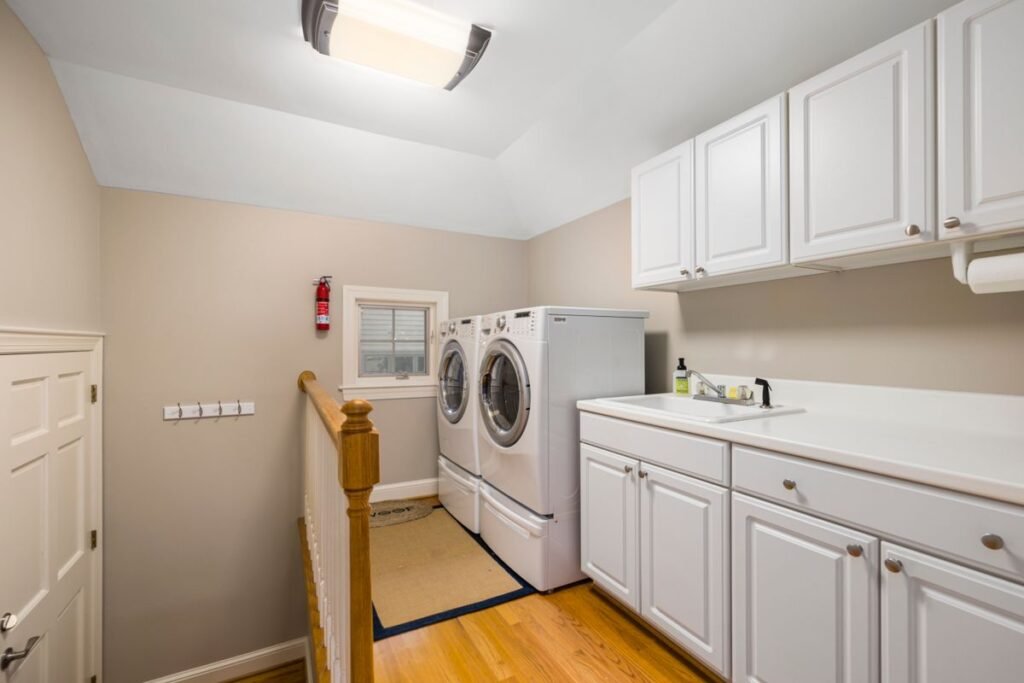
How to Deep Clean Your Laundry Room: 6 Simple Steps
Your laundry room works harder than almost any other space in the house, yet it is usually the last one to get cleaned. Lint, detergent residue, moisture and clutter build up quietly, and they shorten the life of your washer and dryer, cost you drying time and can even create fire risk. Here is a six-step deep clean that takes about two hours and keeps the room, and your appliances, running like new.
Step 1: Empty the Room and Sort the Clutter
Pull everything out: hampers, detergents, baskets, folded laundry waiting to be put away. Wipe down the empty shelves and countertops as you go, and sweep or vacuum the floor while the space is clear. Then sort what you removed:
- Throw out empty bottles, expired products and mystery stains that never came out
- Donate or give away products you no longer use
- Return out-of-place items (that is where the missing sock lives) to their real homes
- Keep only what you actually use, grouped by type
With the room empty, you can also finally reach the floor behind the machines, the number one hiding spot for lint, dust and the odd dropped sock.
Step 2: Clean the Washing Machine
Front-loaders and top-loaders both need routine cleaning. Run an empty hot cycle with a washing-machine cleaner (or a cup of white vinegar if your manual allows it), then scrub the detergent drawer and the rubber gasket on front-loaders, that gasket is a classic spot for mould and mildew, which the EPA warns can grow wherever moisture collects. Wipe the drum and door after each cleaning cycle and leave the door ajar between loads so the inside can dry out. A monthly maintenance wash keeps musty smells from ever starting.
Step 3: Clean the Dryer and the Vent
Clean the lint filter after every single load, not just because it speeds up drying, but because a clogged lint screen is one of the leading contributors to clothes-dryer fires. The U.S. Fire Administration’s research on residential clothes dryer fires found that failure to clean was the leading factor in dryer fire ignitions. The routine:
- Remove and rinse the lint filter, and wipe the filter housing with a damp cloth
- Vacuum the dryer drum and around the door seal
- Unplug the dryer and vacuum the vent opening behind it
- Twice a year, disconnect the vent hose and clean it end to end (or hire a professional vent cleaning)
Signs you need vent cleaning now: clothes taking noticeably longer to dry, a burning smell, or a hot dryer exterior mid-cycle.
Step 4: Wipe Down Every Surface
Detergent spills, dust and fabric-softener residue coat countertops, shelves, the tops of machines and the utility sink. Work through the room top to bottom:
- Wipe cabinet tops and light fixtures first (dust falls as you go)
- Clean counters and shelves with an all-purpose cleaner
- Scrub the utility sink and faucet, soap scum loves it there
- Wipe switch plates, door handles and the machines’ control panels
If you see mould or mildew on walls or caulking around the sink, treat it early: the EPA’s guidance is that moisture control is the key to preventing mould, and laundry rooms are among the most moisture-prone rooms in the home. Fix any leaks and keep the room ventilated.
Step 5: Mop the Floors
Sweep or vacuum first, then mop with a cleaner suited to your flooring (tile, vinyl or laminate). Pay attention to corners, under the machines and around the base of the washer, where detergent drips collect. If you have tile, scrub the grout lines with a stiff brush, discoloured grout is usually just trapped dirt and soap residue, and cleaning it transforms the whole room. Wipe up spills immediately from now on: standing water on laundry-room floors is a slip hazard and feeds mildew.
Step 6: Organize and Freshen the Space
With everything clean, set up systems that keep it that way:
- Store detergents and softeners in labelled containers on shelves or in a caddy, off the floor and out of reach of kids and pets
- Keep a small bin for dryer lint and a hook for the dust brush
- Add shelves or hooks to use vertical space if the room is small
- Leave the washer door and dryer door open between uses so interiors dry out
- Open a window or run a fan during and after laundry to control humidity
Ventilation is the single best habit for a laundry room: it prevents the musty smell and the moisture problems that cause mildew. Good airflow also matters because some cleaning and laundry products release volatile organic compounds, the EPA notes household products are a source of VOCs indoors, so fresh air while you work is a simple health win.
A Laundry Room Maintenance Schedule
| Task | Frequency |
|---|---|
| Clean the lint filter | After every load |
| Wipe the washer gasket and door | Weekly, leave door ajar |
| Run an empty hot maintenance cycle | Monthly |
| Wipe shelves, counters and machines | Monthly |
| Deep clean the room, scrub sink and grout | Every 3 – 6 months |
| Clean the dryer vent hose | Twice a year |
When to Call a Professional
If the laundry room is part of a whole-home deep clean, or you would rather spend your weekend doing anything else, professional help is a reasonable call. A home deep cleaning from Cleaning Hive covers the laundry room, washer exteriors, dryer, utility sink, shelves, floors, and our regular home cleaning keeps it maintained between deep cleans. Check the FAQ for what is included or book online, 48 hours’ notice keeps scheduling flexible, and the 24-hour service guarantee applies if anything is ever missed.
Frequently Asked Questions
How often should I deep clean my washing machine? Run a hot, empty maintenance cycle monthly, and wipe the gasket and drawer at the same time. A full appliance interior clean every three months keeps odours away and helps the machine last longer.
Why does my laundry room smell musty? Almost always moisture: a damp washer gasket, wet clothes left sitting, or poor ventilation. Wipe the gasket, leave doors open between loads, remove wet laundry promptly, and run a monthly hot cleaning cycle.
How do I know if my dryer vent needs cleaning? Clothes taking longer to dry, a hot dryer at the end of a cycle, or a burning smell are the classic signs. Clean the vent hose twice a year as prevention, and call a professional vent cleaner if you suspect a deep blockage.
Is it worth hiring someone to deep clean the laundry room? If it keeps getting skipped on your list, yes, it is a two-hour job with a lot of bending and scrubbing. A professional deep clean also catches the hidden spots, like behind and under the machines, that most DIY sessions miss.