How to Clean a Sink: Quick Steps for a Sparkling Kitchen and Bathroom Sink
A clean sink matters more than any other surface in the house: it is where you prepare food, wash dishes and brush your teeth, and it is the surface most likely to harbour bacteria from raw meat, dirty dishes and everyday use. Cleaning it properly takes about ten minutes with supplies you already own. Here is the step-by-step for both kitchen and bathroom sinks, plus how often to do each part.
Step 1: Clear and Rinse
Remove dishes, sponges, soap dishes and anything else sitting in or around the sink, and rinse the basin with hot water to loosen food particles and toothpaste residue. Pull the drain stopper and lift it out, gunk hides under it, and set it aside to soak in hot, soapy water while you work. This two-minute reset makes every following step more effective.
Step 2: Scrub the Basin
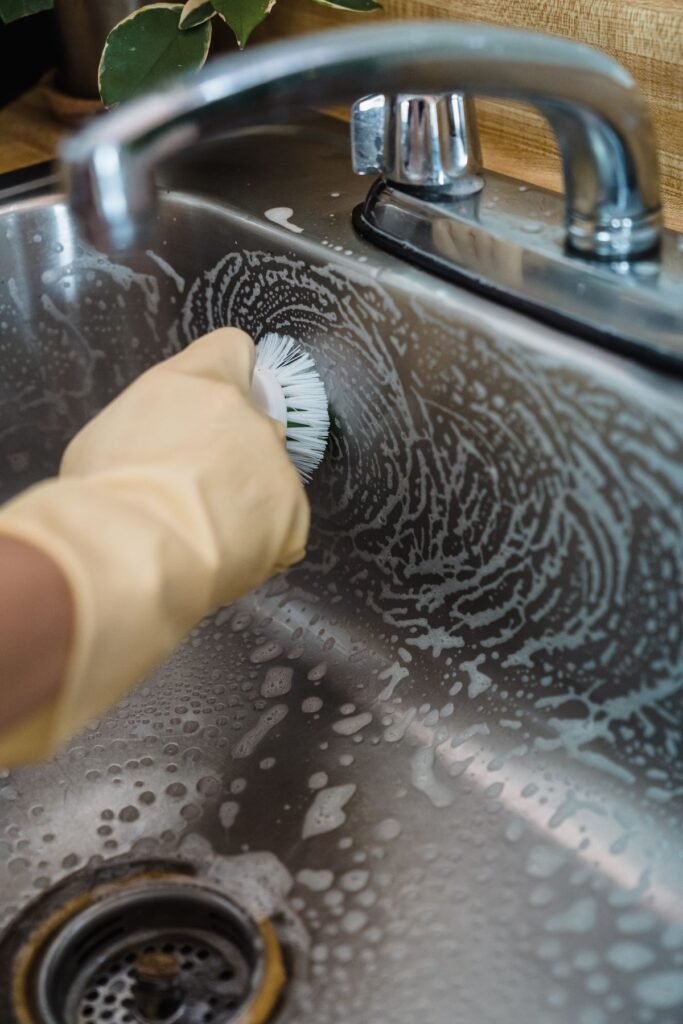
Use warm water, a few drops of dish soap and a soft sponge or cloth for the everyday clean. Work in circles from the top edges down, and pay attention to the corners and the rim where grime builds first. A weekly scrub with a gentle abrasive, baking soda paste works well on stainless steel and porcelain, handles the film that soap alone leaves behind. Skip abrasive pads and harsh scrubbers on polished surfaces: they leave micro-scratches that trap dirt and make the sink look permanently dull.
Step 3: Don’t Skip the Faucet and Handles
The faucet, handles and the area behind the tap are touched constantly but rinsed almost never, which makes them one of the germiest spots in the kitchen. Wipe them with a damp cloth and a mild cleaner, paying attention to the base of the faucet where soap scum and hard-water spots collect. The World Health Organization’s food safety guidance emphasizes that hygiene in food preparation areas, including clean surfaces and hands, is a key defence against foodborne illness, and a faucet that is wiped daily is part of that habit.
Step 4: Disinfect (Especially After Raw Meat)
For everyday use, soap and water are enough. After preparing raw meat, poultry or eggs, disinfect the sink and surrounding counter: apply a disinfectant labelled for kitchen use, follow the contact time on the label, then rinse. The Canadian Centre for Occupational Health and Safety (CCOHS) notes that proper cleaning followed by disinfection is the standard for food-contact surfaces, cleaning removes the dirt, disinfection kills what is left. If you use a disinfectant spray, the EPA keeps a list of registered disinfectants that meet public-health standards for use on hard surfaces.
Step 5: Deodorize and Clean the Drain
Odours come from the drain, not the basin. Once a week, pour a pot of boiling water down the drain (check your pipes are safe for it first), or use a baking soda and vinegar rinse followed by hot water. Avoid dumping grease or coffee grounds down the sink, they coat the pipes and are the main cause of slow drains and smells. A monthly deep treatment keeps the whole system fresh.
Sink Care by Material
| Sink material | Clean with | Avoid |
|---|---|---|
| Stainless steel | Dish soap, baking soda paste, wipe with the grain | Abrasive pads, bleach left to sit |
| Porcelain / ceramic | Mild cleaner, soft sponge, baking soda for stains | Harsh scouring powders, metal scrubbers |
| Composite / granite | pH-neutral cleaner, warm water | Vinegar, bleach and abrasive pads (they etch the surface) |
| Copper | Mild soap and water, specialized copper polish | Acidic cleaners and citrus |
Bathroom Sink Quick Routine
The bathroom sink gets the same treatment with two adjustments: toothpaste and soap scum build up fast, so wipe it down a couple of times a week, and check the caulking around the basin for mould. Damp caulk lines are a classic spot for mildew, and the EPA points out that controlling moisture is the key to preventing mould, wipe standing water from the rim and caulk after use, and treat any dark spots early before they spread.
Keep It Simple With a Professional Routine
A ten-minute sink clean is easy to fit in, but sinks are only one small part of a home that needs regular attention. If the whole routine keeps slipping, Cleaning Hive’s regular home cleaning includes sinks, faucets and counters in every visit, and a home deep cleaning handles the drain deodorizing, caulk checks and built-up grime that weekly cleaning misses. See what is included in the FAQ, or book your cleaning online and check if we serve your area.
Frequently Asked Questions
How often should I clean my kitchen sink? Rinse and wipe the basin daily, scrub with soap and water every day or two, disinfect after handling raw meat, and deodorize the drain weekly. That routine keeps the sink, and the food you prepare in it, genuinely clean.
Is it safe to use bleach in a stainless steel sink? In small, rinsed amounts, yes, but it should not sit on the surface, prolonged contact can pit and discolour stainless steel. For routine cleaning, dish soap and baking soda are gentler and work just as well.
How do I get rid of sink odours? Odours almost always come from the drain. Pour boiling water down weekly, follow with a baking soda and vinegar rinse, and stop putting grease and food scraps down the drain. If the smell persists, the trap may need removing and cleaning.
Do I need to disinfect my sink every day? No, soap and water handle everyday use. Disinfect when raw meat or poultry has touched the sink, when someone in the home is sick, or when you are preparing food for someone with a weakened immune system. Always follow the disinfectant’s contact time.