Top 7 Ways to Green-Clean Your House for a Healthier Home
Green cleaning means switching to methods and products that clean well without loading your indoor air with unnecessary chemicals, and it works for everyday homes, not just eco-purists. The payoffs are practical: fewer synthetic fumes, less plastic waste, and a home that’s safer for kids, pets, and anyone with asthma or allergies. These are the seven changes that deliver the biggest results for a healthier home.
1. Swap harsh conventional cleaners for certified safer products
Many conventional cleaners contain ingredients that release volatile organic compounds (VOCs) into the air you breathe. The U.S. Environmental Protection Agency explains what VOCs are and why levels indoors matter, noting they can be several times higher indoors than outdoors. Look for products certified under programs like EPA Safer Choice, which screens ingredients for health and environmental criteria, or choose simple ingredients like vinegar, baking soda, and castile soap.
2. Make your own all-purpose cleaner
One spray bottle, one part white vinegar, one part water, and a few drops of dish soap handles counters, sinks, mirrors, and tubs. Baking soda adds gentle scrubbing power for grout and stove tops. Homemade mixes cost pennies, cut packaging waste, and let you control exactly what touches your surfaces, the core of green cleaning.
3. Switch to microfiber cloths instead of paper towels
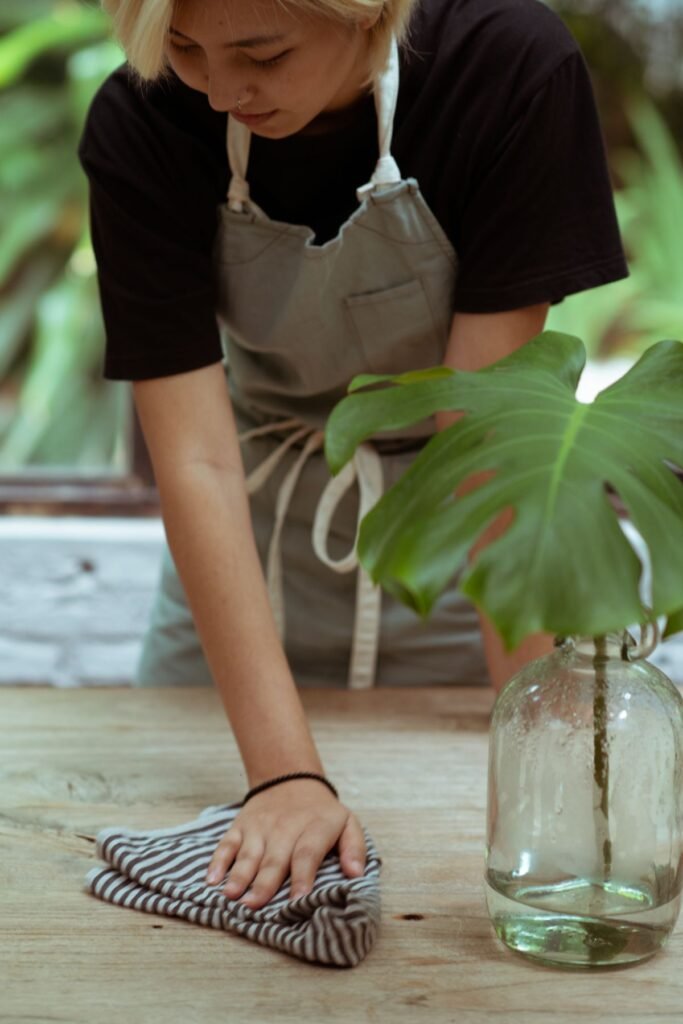
Microfiber lifts dust and grime with just water, so you use fewer chemicals overall. Keep a colour-coded set, one for kitchen, one for bathrooms, one for dusting, and launder them between uses. Over a year, that swap alone removes hundreds of rolls of paper towels from your waste stream.
4. Open the windows and ventilate while you clean
Cleaning raises humidity and stirs up whatever is in your products and dust. Opening windows for ten minutes while you work flushes it out. Regular ventilation is one of the cheapest ways the EPA recommends for improving indoor air quality, alongside removing sources of pollution and filtering the air.
5. Skip synthetic fragrances
“Fresh scent” usually means added fragrance compounds, not cleanliness. Scented air fresheners, dryer sheets, and perfumed cleaners can be triggers for people with asthma and chemical sensitivities. Choose unscented or naturally scented products, lemon, lavender, or tea tree, and let open windows do the freshening instead.
6. Cut single-use cleaning supplies
Swap disposable wipes for reusable cloths, replace plastic scrub brushes with compostable or long-lasting ones, and buy concentrates you dilute at home. Fewer throwaway items means fewer chemicals per clean and less garbage, the environmental half of the green-cleaning equation.
7. Book green professional cleaning for the deep jobs
Some jobs, oven degreasing, grout, move-out resets, are bigger than a spray bottle. When they come up, choose a service that offers eco-friendly cleaning using safer, low-toxicity products, and pair it with regular home cleaning so buildup never gets a chance to start. A deep cleaning service every few months keeps the whole house reset without chemical-intensive weekly scrubbing.
Quick green-cleaning cheat sheet
- Kitchen counters and sinks: vinegar-water spray, then wipe with microfiber.
- Stubborn stains and grout: baking soda paste, scrub, rinse.
- Glass and mirrors: diluted vinegar or a squeegee, no ammonia needed.
- Toilets and tubs: baking soda scrub plus a safer-certified disinfectant where needed.
- Floors: damp microfiber mop; add a few drops of castile soap for tough traffic lanes.
Simple green swaps to make this week
| Conventional product | Green swap | Where it works |
|---|---|---|
| All-purpose spray | Vinegar-water mix in a spray bottle | Counters, sinks, tubs, windows |
| Scouring powder | Baking soda paste | Stovetops, grout, stained surfaces |
| Floor cleaner | Castile soap in warm water | Hard floors, damp-mopped |
| Glass cleaner | Diluted vinegar and a squeegee | Mirrors, windows, shower doors |
| Fabric softener | Wool dryer balls | Laundry, softness without chemicals |
| Air freshener | Open windows plus baking soda | Whole rooms, odour absorption |
Frequently Asked Questions
Is green cleaning as effective as regular cleaning? Yes for most everyday jobs, vinegar cuts grease and hard water, baking soda scrubs without scratching, and microfiber lifts grime mechanically, and for disinfection where it’s genuinely needed, choose a certified safer disinfectant and follow the label contact time.
Are homemade cleaners safe on all surfaces? No, vinegar is acidic and can etch natural stone and dull some sealed hardwood finishes, and baking soda is abrasive on delicate surfaces; always spot-test in an inconspicuous corner before using a DIY mix on a new surface.
Can green cleaning help with allergies and asthma? It can, reducing fragrances and airborne chemicals, and removing dust regularly, lowers common triggers, and organizations like Asthma Canada emphasize reducing exposure to irritants in the home.
Do professional cleaning companies really offer eco-friendly options? Many do, Cleaning Hive’s eco-friendly service uses safer, low-toxicity products on request, and you can note product preferences when you book your clean online, so ask before you hire rather than assuming.
How do I start green cleaning without replacing everything at once? Use up what you have, then replace with safer alternatives one product at a time, start with the all-purpose spray and microfiber cloths, and add vinegar, baking soda, and castile soap as your old bottles run out.