How to Deep Clean Your Oven: 5 Simple Tips
A dirty oven does more than look bad: baked-on grease burns and smokes at high heat, flavours your food, and makes the oven heat unevenly. Deep cleaning it takes about an hour of active work, most of which is waiting for the cleaner to work, and doing it every three to six months keeps the smoke, the smells and the burnt-on crust from ever building up. Here is the method, from prepping the kitchen to the final rinse.
1. Prep the Oven and Protect the Kitchen
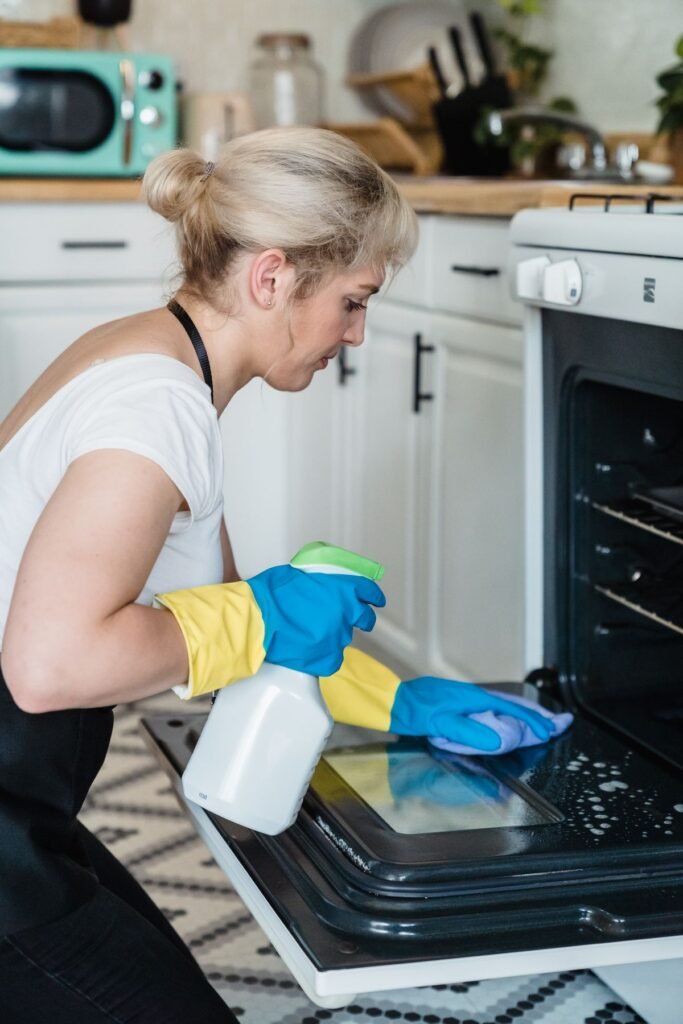
Start by removing the racks, thermometer and any other loose parts, they clean separately. Open windows or run the range hood fan before you start, because oven cleaners release fumes and you want the air moving. Sweep or vacuum loose crumbs and debris out of the oven floor first: cleaner works on grease, not on piles of crumbs. Lay newspaper or an old towel in front of the oven to catch drips, and check the manufacturer’s manual for anything specific to your model, some self-cleaning and newer ovens have surfaces that need special care.
2. Soak the Racks While You Clean the Interior
The racks are the slowest part, so start them first: fill a bathtub or utility sink with hot water, add a degreasing dish soap, and let the racks soak while you work on the oven interior. If the racks are too big for the tub, soak them in the shower or use the oven-cleaning method below with a paste applied directly. After 30 to 60 minutes, most baked-on residue wipes off with a sponge, no scraping required.
3. Apply the Cleaner and Let It Work
Choose your cleaner based on how dirty the oven is and how much fume you want in your kitchen:
- Light to moderate grime: a baking soda and water paste, spread generously and left for 12 hours or overnight, cheap, non-toxic and effective
- Heavy grease: a commercial oven cleaner, sprayed or applied per the label, left for the time the product specifies (usually 20 – 60 minutes), and if you want to keep chemicals light, look for a product certified under the EPA’s Safer Choice program
Whichever you use, avoid the heating elements and the oven door seal, cleaner on the elements burns and smokes the next time you cook. For commercial cleaners, follow the label’s safety steps: wear gloves, keep the kitchen ventilated, and keep kids and pets out while it works. Cleaning products can release volatile organic compounds into the air, and the EPA notes that ventilation reduces exposure to VOCs from household products, the range hood and an open window make a real difference.
4. Scrub, Rinse, Repeat on Stubborn Spots
After the cleaner has had time to work, wipe the interior with a damp sponge or cloth, rinsing it often. For stubborn spots, reapply the cleaner to the remaining patches and give them another soak, or use a plastic scraper on thick crust, never metal scrapers or steel wool on the enamel, which scratch and then trap grease permanently. Pay attention to the corners, the door edges and the glass: the door glass is usually the most visible part of a “dirty oven” and cleans up fast once the interior is done.
Finish with a clean-water pass over every surface to remove any cleaner residue, then dry with a cloth. Residue left behind burns and smokes the next time you preheat, the rinse step is what actually prevents that.
5. Clean the Glass Door and the Outside
While the interior dries, clean the door glass with a degreaser or a baking soda paste, and wipe the outside of the oven, the control panel, handles and sides collect grease film from daily cooking that most people never notice until it is wiped. Use a cloth dampened with a mild cleaner on the control panel rather than spraying directly, so liquid does not run into the controls. The floor under the oven and the gap between the oven and cabinets deserve a sweep and mop too, since crumbs and grease settle there.
Oven Cleaning at a Glance
| Part | Method | Frequency |
|---|---|---|
| Interior walls and floor | Baking soda paste or commercial cleaner, then rinse | Every 3 – 6 months |
| Racks | Soak in hot soapy water, then wipe | Every 3 – 6 months |
| Door glass | Degreaser or baking soda paste | Monthly or as needed |
| Outside and control panel | Mild cleaner on a damp cloth | Weekly |
| Spills inside the oven | Wipe up once the oven cools | After every spill |
Prevent the Buildup So Deep Cleans Get Easier
The best time to clean an oven spill is when it happens: once the oven cools, wipe fresh spills with a damp cloth before they bake on. Use a baking sheet or foil liner under pies and casseroles that bubble over, and consider covering roasts. These two habits cut deep-cleaning frequency in half, and the Canadian Centre for Occupational Health and Safety’s guidance on safe use of cleaning products applies here too: gloves, ventilation and reading the label are non-negotiable with oven cleaners.
When to Let a Professional Do It
Oven cleaning is the chore people postpone most, and the one that keeps smoking every time they cook. If it has been a year or you are facing a rock-hard crust, a professional deep clean handles it in a couple of hours. Cleaning Hive’s home deep cleaning includes the oven interior, racks and exterior, and our regular home cleaning keeps the outside and stovetop maintained between deep cleans. Check the FAQ for what is included, or book your deep clean online.
Frequently Asked Questions
How often should I deep clean my oven? Every three to six months for a regularly used oven, and more often if you roast or bake heavily. Wiping spills as soon as the oven cools keeps the buildup, and the deep cleans, much lighter.
Is baking soda as effective as commercial oven cleaner? For light to moderate buildup, yes, a baking soda paste left overnight cuts through grease with no fumes and no harsh chemicals. For years-old crust, a commercial cleaner or professional service is faster and more thorough.
Why does my oven smoke when I preheat it? Almost always, burnt-on grease and food residue on the interior walls or floor. A thorough clean of the interior, including the spots around the heating elements and the door edges, eliminates the smoke, and cleaning spills promptly keeps it from returning.
Can I clean the oven while it is still warm? No. Wait until the oven is completely cool before cleaning, warm surfaces bake cleaners and pastes on, spread fumes faster, and make the job harder and less safe. Most cleaners also specify a cool surface for a reason.