How to Clean Your Bathroom in 7 Easy Steps
The fastest way to a genuinely clean bathroom is to work in the right order, dry surfaces first, wet ones last, from the top of the room down, with the right tools ready before you start. Follow these seven steps and you can take a bathroom from grimy to guest-ready in roughly an hour, without scrubbing the same spot twice or missing the places bacteria actually hide.
Gather Your Bathroom Cleaning Kit First
Collecting everything in one caddy saves you from stopping mid-scrub to hunt for supplies. You’ll want:
- An all-purpose bathroom cleaner or a mild disinfectant for counters and fixtures
- Toilet bowl cleaner and a dedicated toilet brush
- Microfibre cloths, one set for cleaning, one for drying and polishing
- A stiff scrub brush or sponge for tiles, grout, and soap scum
- Glass cleaner for mirrors, or a simple vinegar-and-water mix in a spray bottle
- Rubber gloves to protect your hands from cleaning chemicals
Before you start, check the label on every product. Health Canada’s guidance on household products is clear: follow manufacturer instructions, use products only for their intended purpose, and never mix cleaning products, combining certain chemicals can release dangerous fumes.
The 7-Step Bathroom Cleaning Routine
Step 1: Declutter and prep
Clear the counters, sink ledges, and shower shelves. Move toiletries into a basket or onto the edge of the tub, toss empty bottles, and remove bathmats and towels so they can be washed. A clear room is far faster to clean, and you can’t wipe a surface you can’t see.
Step 2: Dust and sweep
Work top to bottom so dirt falls onto surfaces you haven’t cleaned yet. Dust light fixtures, vent covers, window sills, and the tops of shelves, then sweep or vacuum the floor. This simple order is the single biggest time-saver in any bathroom cleaning routine.
Step 3: Clean the shower and tub
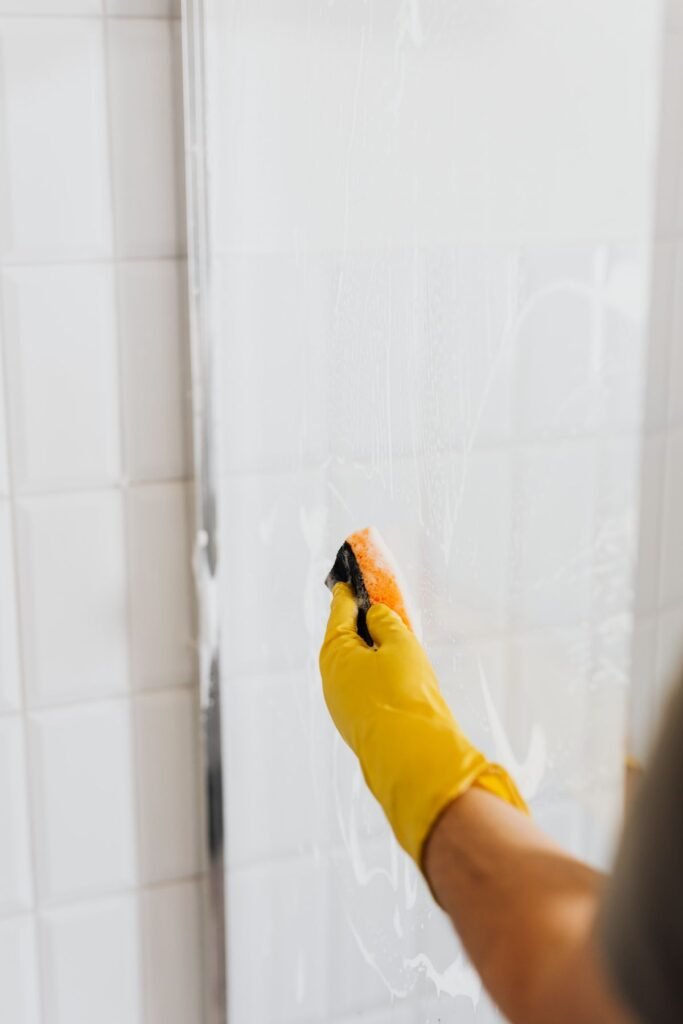
Spray the walls, door, and tub with your cleaner and let it sit for a few minutes to break down soap scum, dwell time does most of the work. Scrub tiles and corners, rinse everything thoroughly, and use an old toothbrush for the grout lines and around fixtures. If stubborn build-up has taken hold, a professional deep clean with proper descalers is worth booking once or twice a year.
Step 4: Tackle the toilet
Squirt toilet bowl cleaner under the rim and inside the bowl, then clean the outside while the cleaner works. Wipe the tank, lid, seat, and base with a disinfecting cleaner, working from the cleanest areas to the dirtiest. Then scrub the bowl, flush, and rinse the brush. Remember that cleaning physically removes germs while disinfecting kills what remains, the CDC’s guidance on cleaning and disinfecting your home recommends cleaning surfaces first, then disinfecting the high-touch spots.
Step 5: Clean the sink and countertops
Wipe down the sink, faucet, and countertops with your all-purpose cleaner, paying attention to the base of the faucet and the backsplash where toothpaste and soap splash. Polish the chrome with a dry microfibre cloth to remove water spots and fingerprints.
Step 6: Wipe mirrors and glass
Spray the mirror with glass cleaner and wipe with a clean, dry microfibre cloth using vertical strokes, then horizontal ones. Skip paper towels, they leave lint behind. This step is quick, but it’s what makes the whole room look finished.
Step 7: Mop the floor
Mop from the far corner back toward the door so you never walk across wet floor. Use a fresh mop head or a floor cloth you only use in bathrooms, and give the baseboards a quick wipe while you’re down there. Let everything air dry with the exhaust fan running or a window cracked open.
How Often Should You Clean Your Bathroom?
| Task | How often | Why it matters |
|---|---|---|
| Wipe counters, sink, and mirror | Weekly | Stops toothpaste, soap, and water spots from baking on |
| Clean toilet and shower | Weekly | Prevents stains, soap scum, and odours from building up |
| Sweep and mop the floor | Weekly | Removes hair, dust, and tracked-in dirt |
| Scrub grout, tiles, and vents | Monthly to quarterly | Keeps mould and mineral deposits from taking hold |
Bathrooms are the most moisture-prone room in the house, and damp corners are exactly where mould likes to grow. CMHC’s guidance on mould in housing recommends fixing moisture problems at their source and cleaning small mould areas promptly with warm water and unscented dish soap, while the EPA’s mould prevention guidance stresses keeping humidity in check. If mould covers a large area or keeps coming back, that’s a job for trained professionals.
When Your Bathroom Needs More Than a Weekly Clean
If you’re short on time, dealing with a rental turnover, or facing build-up that has gone on too long to fight with a sponge, professional help is a reasonable call. A home deep cleaning service tackles grout, vents, and fixtures that weekly upkeep misses, and condo cleaning is tailored to compact bathrooms and tight schedules. If you’d rather hand the whole job over, our regular home cleaning visits include bathroom care, and every booking is backed by a 24-hour service guarantee. See our cleaning FAQ for what’s included, or book a cleaning online and get the grime handled for you.
Frequently Asked Questions
How long does it take to clean a bathroom? A typical bathroom takes about 45 to 60 minutes once your supplies are ready, less for a quick weekly tidy, more for a deep clean with grout scrubbing and vent washing. Working top to bottom in the order above is the fastest way to avoid re-cleaning surfaces.
What order should I clean a bathroom in? Start with dry tasks like dusting, then clean the shower and tub, the toilet, the sink and counters, mirrors, and finally the floor. This top-to-bottom, dry-to-wet sequence means dust and dirt land on surfaces you haven’t cleaned yet, so you only wipe each spot once.
Can I clean a bathroom with vinegar and baking soda? Yes, for everyday grime: vinegar cuts soap scum and mineral deposits, and baking soda makes a gentle scrubbing paste. But neither is a registered disinfectant, so for the toilet seat, handles, and other high-touch areas, use a proper disinfecting product.
How often should I deep clean my bathroom? Weekly cleaning handles day-to-day grime, but grout, tiles, vents, and behind-the-toilet spots deserve a deeper clean every few months, more often in busy households or bathrooms with poor ventilation. A professional deep clean is a fast way to reset those problem areas.